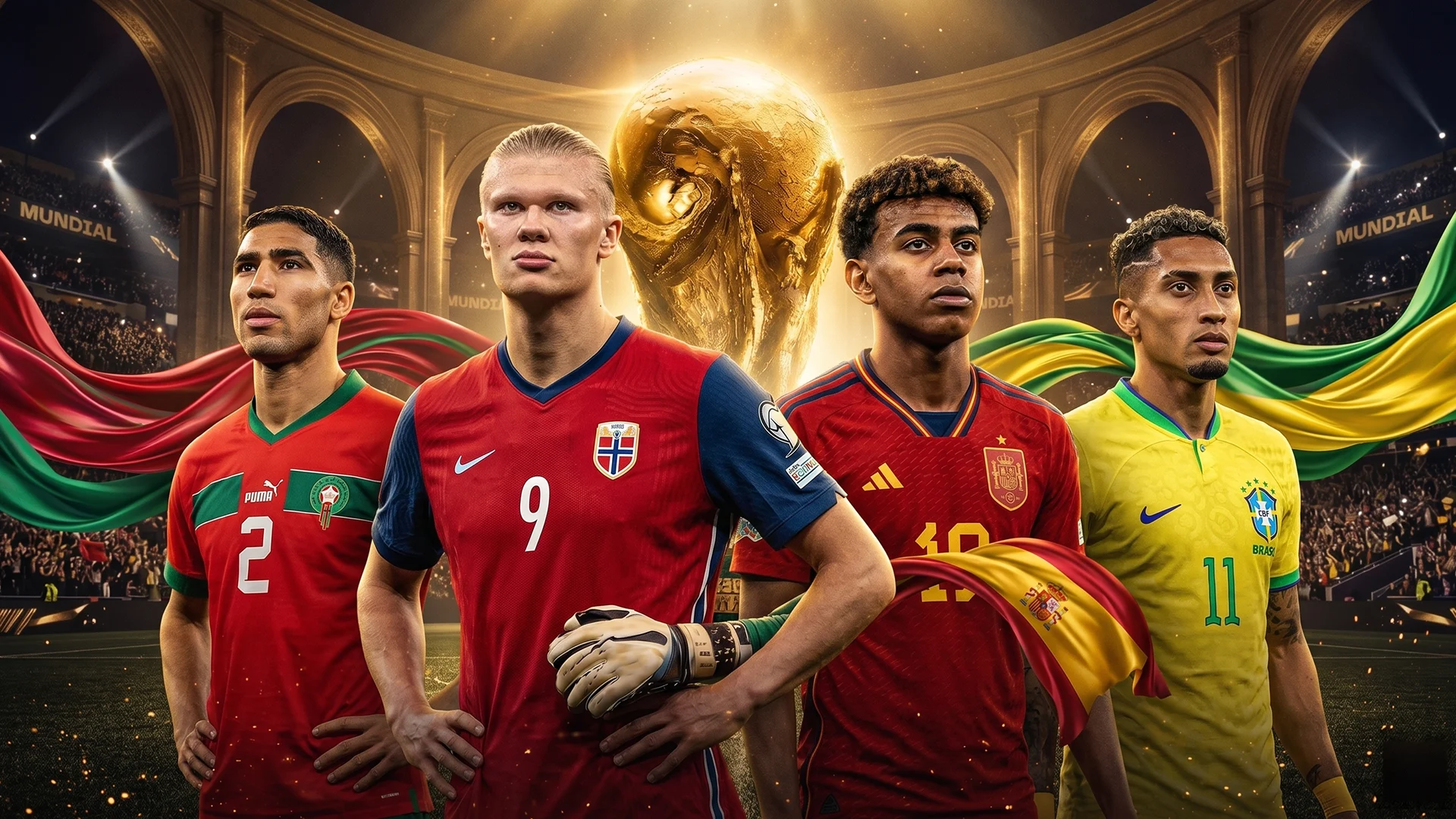
World Cup 2026 dual-national stars show how modern international football is shaped by family roots, birthplace, youth development and timing. Some players grow up between two football identitys. Others are born in one country, trained in another and eligible for more than one national team. Those choices can change a World Cup.
The issue matters because one national-team decision can change a squad, a group route and sometimes an entire football generation. World Cup 2026 will bring more of these stories because the expanded tournament gives more countries a real stage.
Why dual-national choices matter at World Cup 2026
International football is not only about where a player is born. Eligibility can involve parents, grandparents, residence rules, youth appearances and senior competitive caps. That means a player can sometimes have a real decision to make: represent the country of birth, follow family heritage or choose the football pathway that feels strongest.
For national teams, these decisions can reshape entire squads. A single elite full-back, striker, midfielder or goalkeeper can solve a position that has been weak for years. For fans, it also adds emotion because the choice often touches identity, family and belonging.
Famous dual-national storylines before 2026
| Player | Decision angle | Why it matters |
|---|---|---|
| Achraf Hakimi | Born in Spain, chose Morocco | Became a symbol of Morocco’s rise and helped push the team to historic heights. |
| Erling Haaland | Born in England, represents Norway | Gives Norway a top striker and changes how opponents prepare. |
| Kylian Mbappe | Family roots outside mainland France | Shows how modern national identity and elite development can overlap. |
| Dean Huijsen | Born in the Netherlands, linked with Spain | Highlights how youth development and long-term opportunity influence decisions. |
| Kevin De Bruyne | Eligible conversation through family background | Belgium’s golden generation shows what one choice can mean for a country. |
How eligibility works in plain football terms
The rules can be complicated, but the basic idea is simple. A player may qualify through birth, parents, grandparents or residence. Youth appearances do not always close the door, but senior competitive appearances usually matter much more. Once a player is tied to a senior national team under FIFA rules, switching becomes much harder or impossible depending on the case.
That is why timing is important. Federations try to build relationships early. Players and families weigh playing time, emotional connection, tournament chances and long-term role. The decision is personal, but the football consequences are public.
What it means for squads and coaches
For coaches, dual-national recruitment can fill gaps quickly. A country short on centre-backs may suddenly gain a starter. A team lacking finishing may gain a striker. A smaller nation may add one player who lifts belief across the entire squad. At World Cup level, those margins matter.
Fans can compare these stories with the qualified teams, World Cup 2026 groups and World Cup 2026 squad tracker. A dual-national decision becomes more important when the player fills a weak position or joins a team with a favourable group route.
The emotional side of choosing a country
The debate can become heated because supporters often view national-team choices through pride. But for players, the decision is rarely cold or simple. It may involve parents, childhood memories, language, opportunity, trust from coaches and the feeling of where they belong.
That is why the best way to read these stories is with context. A player choosing one country is not always rejecting another. Often it is choosing the path that best fits identity and football future at the same time.
Quick questions
Can a player choose more than one national team?
A player can be eligible for more than one country, but FIFA rules limit switching once senior competitive appearances are made.
Why are dual-national players important at World Cups?
They can change squad depth, fix weak positions and add elite quality to teams that might otherwise lack it.
Where can fans track World Cup 2026 squads?
Use the World Cup 2026 squad tracker, qualified teams and World Cup 2026 groups for confirmed tournament context.
How federations compete for dual-national players
Federations do not wait until a player becomes famous. They build contact early, invite families into the process and explain the pathway from youth football to senior caps. The best pitch is usually not emotional pressure alone. It is clarity: where does the player fit, how soon can he play, and what role will he have if he commits?
For smaller nations, one successful decision can lift the entire project. Morocco’s recent rise showed how diaspora talent and domestic structure can work together. For bigger nations, the challenge is different: convincing elite players that competition for places will still give them a real future.
Why World Cup 2026 will make this topic bigger
The expanded 2026 format gives more countries a route to the tournament, and that makes dual-national choices even more important. Players who might once have thought a World Cup was unlikely can now see a clearer path. That could make national-team decisions faster, more emotional and more visible in the next cycle.
Source: beIN SPORTS.